
Taste Test: How Dentures Can Affect 1 of the 5 Senses
October 30, 2026
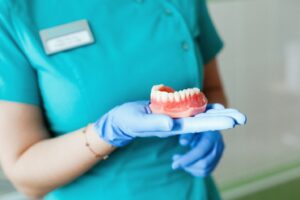
If you’re new to dentures and feel like food doesn’t quite taste the same, you’re not imagining things. Your dentures could very well be contributing to the difference. Continue reading to understand how your restoration can affect your sense of taste and how you can adjust and continue enjoying the foods you love.
How Do Dentures Change Your Sense of Taste?
Your sense of taste comes from taste buds located primarily on your tongue, but other parts of your mouth contribute to how you experience food. The roof of your mouth, known as the palate, also plays a role in detecting flavors and experiencing food textures and temperatures.
Traditional upper dentures cover a portion of the palate. This coverage can interfere with temperature sensations and alter how food feels in your mouth. Although dentures don’t typically block your taste buds, covering the palate may make certain flavors seem less noticeable.
Lower dentures generally have less impact on taste because they do not cover the roof of your mouth. However, they can still change how food moves around your mouth, potentially affecting your overall eating experience.
Other Factors That Can Affect Taste
Dentures aren’t always the only reason food tastes different. Several other factors may contribute to changes in your sense of taste.
- Dry Mouth: Reduced saliva production can make it harder to dissolve and distribute flavor compounds across your taste buds.
- Poor-Fitting Prosthesis: Loose or uncomfortable dentures can make chewing difficult and change how food is distributed throughout your mouth.
- Medications: Certain prescription and over-the-counter medications can cause dry mouth or changes in taste.
- Oral Infections: Denture-related irritation or fungal infections can affect your comfort and ability to enjoy food.
If you experience a sudden or persistent change in taste, talk with your dentist or healthcare provider to identify the underlying cause.
How to Improve Your Eating Experience with Dentures
Adjusting to dentures takes time, but a few simple habits can make meals more enjoyable.
First, practice chewing slowly and evenly on both sides of your mouth. This helps stabilize your dentures and makes eating more comfortable. Experiment with different seasonings and food textures to find what you enjoy most.
You may consider implant-retained dentures. Instead of relying on denture adhesive and suction for a firm foundation, this solution involves surgically placing implant posts into the jaw and connecting them to dentures with an abutment.
Benefits include greater confidence while eating, enjoying foods you may typically avoid with traditional dentures, and no denture portion that blocks your palate.
Changes in taste can be frustrating, but they don’t have to prevent you from enjoying meals. If your dentures interfere with your eating experience, consult your dentist. Adjustments, relining, or exploring alternative denture options may help improve comfort and function.
About the Practice
Rubal Dentistry Azle has proudly served Azle and its surrounding communities since 1996. We’re led by Dr. Frank Rubal and Dr. Jodie Rubal, who have well over 40 combined years of experience in their field. Our denture solutions include full and partial prostheses, as well as implant-retained dentures, and we also offer low-interest financing! We’d love to hear from you. Contact us online or call (817) 444-2585.
No Comments
No comments yet.
RSS feed for comments on this post.
Sorry, the comment form is closed at this time.